A Pinterest manager runs Pinterest accounts for clients: keyword and board strategy, pin design, copywriting, scheduling, and reporting. It's a freelance service business rather than a job title at most companies, and rates commonly sit somewhere between a few hundred and around $1,500 a month per client depending o
JN
Joe Nyambura
Founder & operator, Pinners Haven · August 18, 2026
A Pinterest manager runs Pinterest accounts for clients: keyword and board strategy, pin design, copywriting, scheduling, and reporting. It's a freelance service business rather than a job title at most companies, and rates commonly sit somewhere between a few hundred and around $1,500 a month per client depending on volume and whether strategy is included. The skill it actually rewards is search thinking, not social media management, which is why people arriving from an Instagram-VA background often struggle and people arriving from SEO tend to do well.
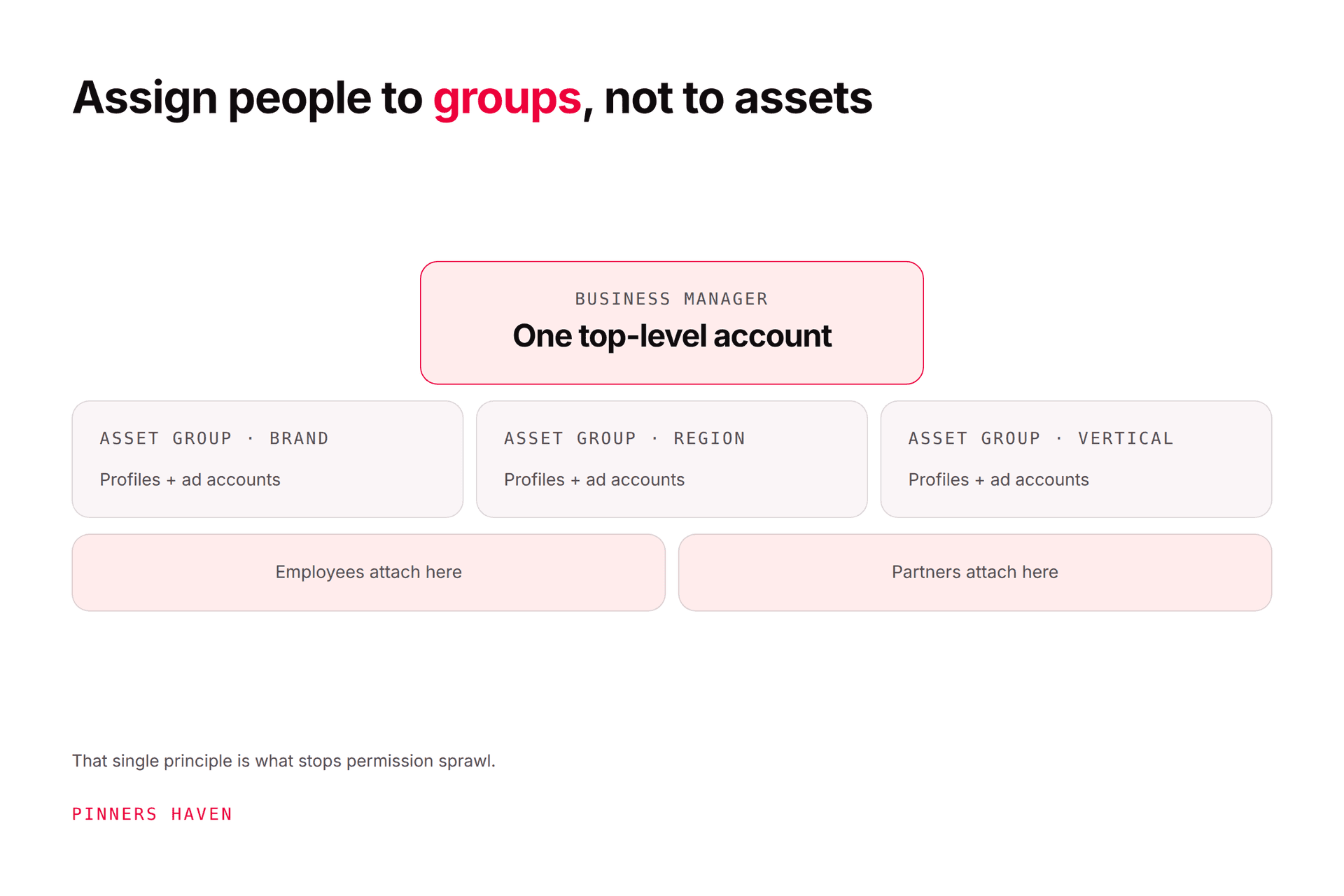
Note the name collision: Pinterest also has a product called Business Manager, which is a permissions tool rather than a job. That's covered in Pinterest Business Manager.
Rate figures below are observed from published freelance and agency rate cards rather than a formal survey. Treat them as orientation and price your own work.
What the job actually involves
Task
Roughly how much of the time
Pin design
The largest single block
Copywriting (titles, descriptions)
Substantial, and always underestimated
Keyword and board strategy
Front-loaded, then periodic
Scheduling and publishing
Small once systematised
Reporting and client comms
Steady, and non-negotiable
Diagnosing problems
Occasional and stressful
The thing to notice: most of the work is production, not strategy. People come to this expecting a strategic role and discover it's largely making pins. That's not a criticism of the job; it's the thing to price correctly and systematise fast.
The skills that matter
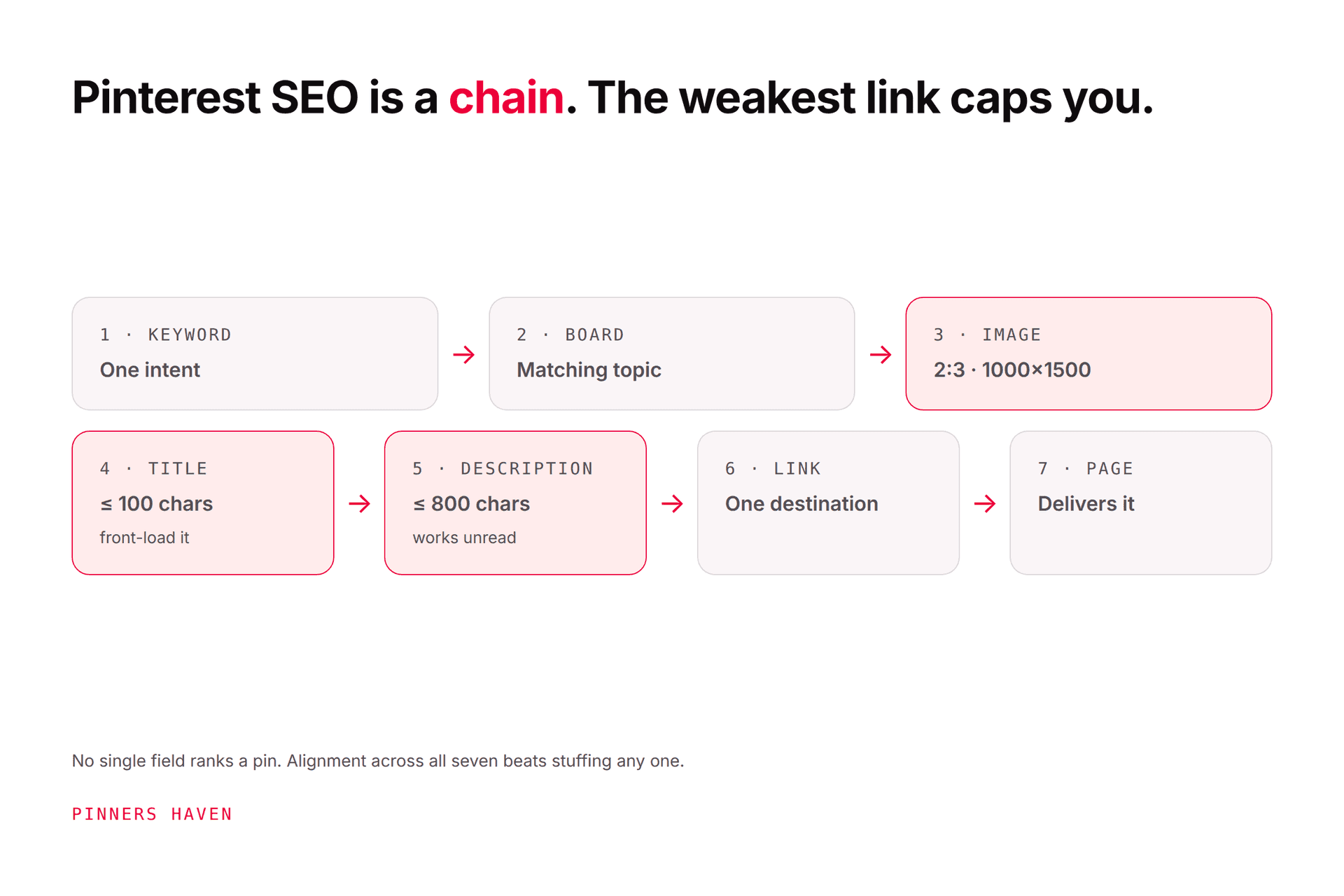
Search thinking. Understanding intent, keywords, and how content maps to queries. This is the differentiator, and it's why Pinterest SEO and Pinterest keywords are the two things to learn first.
Design competence. Not artistry. The ability to build a set of templates that read at thumbnail size and produce varied output. Canva for Pinterest covers the practical version.
Copywriting. Titles under 60 characters that promise something specific, and descriptions that don't repeat each other. Clients rarely notice this is the skill until they see the difference.
Diagnosis. When reach drops, knowing whether it's seasonality, a duplicate-content problem, a destination issue or an enforcement action. Our recovery cluster covers this: impressions dropped, pins not showing up, flagged as spam.
Expectation management. Pinterest results arrive over seasons. A client expecting month-one traffic will fire you in month two regardless of how good the work is.
How to get started
Run your own account first. You cannot sell this credibly without one, and it's the first thing a good client asks to see.
Pick a niche. Food bloggers, Etsy sellers, interior designers, coaches. Niching means reusable templates, reusable keyword research and faster delivery, which is what actually makes the economics work.
Build a template set. Eight to ten layouts doing different jobs. This is your production system and it's the difference between profitable and not.
Take one client cheaply, deliver properly, and document what you did.
Systematise before you scale. Client two should take less time than client one, and if it doesn't, you have a workflow problem, not a sales problem.
Write your onboarding. Account access, brand assets, destination pages, what you need and when.
Pricing, honestly
Common structures:
Model
Typical shape
Monthly retainer
Most common. Set pin volume plus reporting
Setup fee then retainer
Front-loads the strategy work, which is right
Per-pin
Rare, and it punishes you for efficiency
Hourly
Fine while learning; caps your income
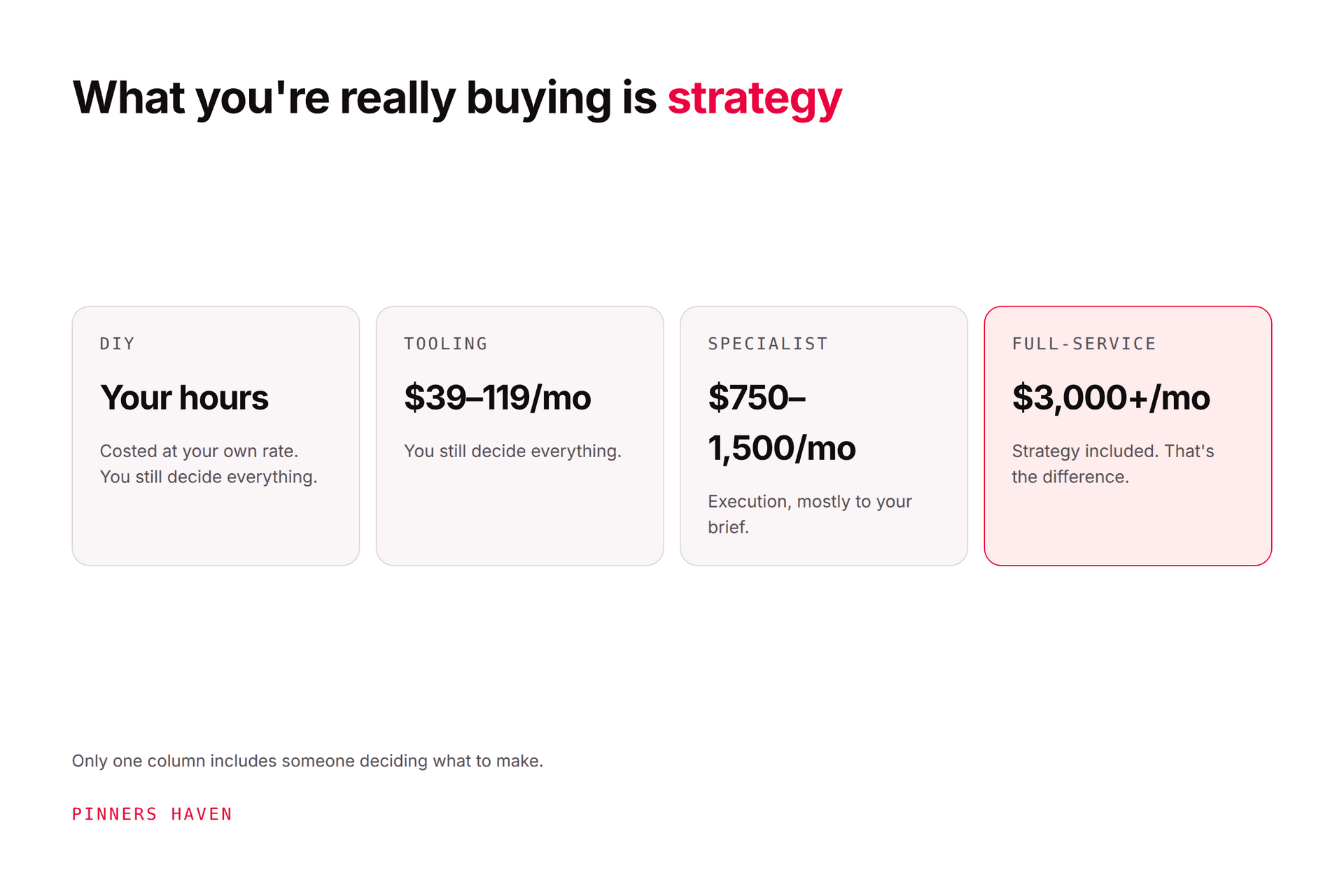
Retainers commonly run from a few hundred a month for low volume up to around $1,500 for high-volume work with strategy included. Above that you're competing with specialist agencies, which is possible but requires demonstrable results.
Price the setup separately. Keyword research, board architecture and template design are front-loaded work, and burying them in month one's retainer means you do the hardest work for the least money and lose if the client leaves at month three.
Never promise results. Not traffic, not rankings, not revenue. Guarantee deliverables, which you control, and be explicit that outcomes depend on demand, seasonality, destination quality and competition. This is both honest and the thing that protects you.
The four things that lose clients
Promising a timeline you can't meet. Pinterest compounds over seasons.
Publishing repetitive creative. Fast to produce, and it risks the client's account. Pinterest warns that repeatedly uploading existing content can lead to a spam flag.
Reporting impressions. Clients don't want impressions, they want outbound clicks and whatever happens after. Report the business metric or you'll be defending vanity numbers.
Taking their password. Use proper account access via Business Manager or authorised connections. Password sharing means you can't be cleanly removed, and it creates login patterns that look like compromise. See auto poster safety.
The ceiling, and how people hit it
Here's the structural problem with this business. Your income is production capacity times rate, and production capacity is hours.
At, say, 100 pins per client per month and a few hours per client in design and copy, you run out of week somewhere around six to ten clients. Then the only moves are raising rates, hiring, or making each client faster to serve.
Making each client faster is the one most people reach for, and it's why Pinterest managers end up with template systems and tooling.
Pinners Haven is built around that constraint: up to 20 angles per topic, an SEO title with three to five unique descriptions per pin, original designs on human-designed templates, and paced publishing via official OAuth so you never hold a client's password. Nothing publishes until it's approved, which is the review gate a client is paying you for. Operator covers 25 sites at $124/mo billed annually; Portfolio covers 50 sites at $291 — which is the shape that fits a manager with a client roster.
It doesn't do the strategy, the client relationship, or the judgement. Those are the parts you're actually selling.
(Disclosure: we make Pinners Haven. We're not affiliated with Pinterest.)
Frequently asked questions
What does a Pinterest manager do?
Runs client Pinterest accounts end to end: keyword and board strategy, pin design, copywriting, scheduling and reporting, plus diagnosing problems when reach drops.
How much do Pinterest managers charge?
Monthly retainers commonly range from a few hundred dollars for low-volume work to around $1,500 for high-volume with strategy included. Rates vary widely by niche, scope and demonstrated results, and these are market observations rather than survey figures.
Do you need a certification to be a Pinterest manager?
No. There's no required credential. What clients evaluate is your own Pinterest account and your results for previous clients, in that order.
How do I get Pinterest management clients?
Run a strong account in a defined niche so prospects can see the work, then approach businesses in that niche directly. Niching makes you both easier to hire and faster to deliver for.
Is Pinterest management still a viable business?
It remains viable where clients treat Pinterest as a search and traffic channel. The pressure on it is production tooling making the work faster, which favours managers who sell strategy and diagnosis rather than pin volume alone.
Should clients give me their Pinterest password?
No, and don't ask. Use Business Manager access or authorised connections so you can be added and removed cleanly without affecting the client's credentials.
How long before a client sees results?
Set the expectation at a full seasonal cycle. Pinterest content compounds and demand for most topics moves with the calendar, so a quarter is often too short to judge.
Sell the judgement, systematise the rest
Pinterest management is a real service business with a real ceiling, and the ceiling is hours spent making pins.
The managers who do well niche down, build a template system early, price the setup separately, report on clicks rather than impressions, and are honest that results take a season. The rest is production, and production is the part worth making faster.