Pinterest for Etsy Sellers: A Practical Traffic Plan
Let's start with the thing half the tutorials get wrong, because following them wastes an afternoon and leaves you convinced you did something incorrectly.
Joe Nyambura
Founder & operator, Pinners Haven · August 18, 2026
On this page18 sections
- Step 1 — prepare the listing first
- Step 2 — set up the business profile
- Step 3 — research buyer language and timing
- Step 4 — make original pin concepts
- Step 5 — write for clarity, not for hype
- Step 6 — publish at a pace you can fulfil
- Step 7 — measure the whole path
- A four-week plan
- The part that doesn't scale
- Nine mistakes to avoid
- Frequently asked questions
- Can I claim my Etsy shop on Pinterest?
- Is Pinterest free for Etsy sellers?
- Should every pin link directly to a listing?
- Can I automate Etsy pins?
- Can I use affiliate links to Etsy?
- How long before Pinterest sends Etsy traffic?
- Make the listing earn the click
Let's start with the thing half the tutorials get wrong, because following them wastes an afternoon and leaves you convinced you did something incorrectly.
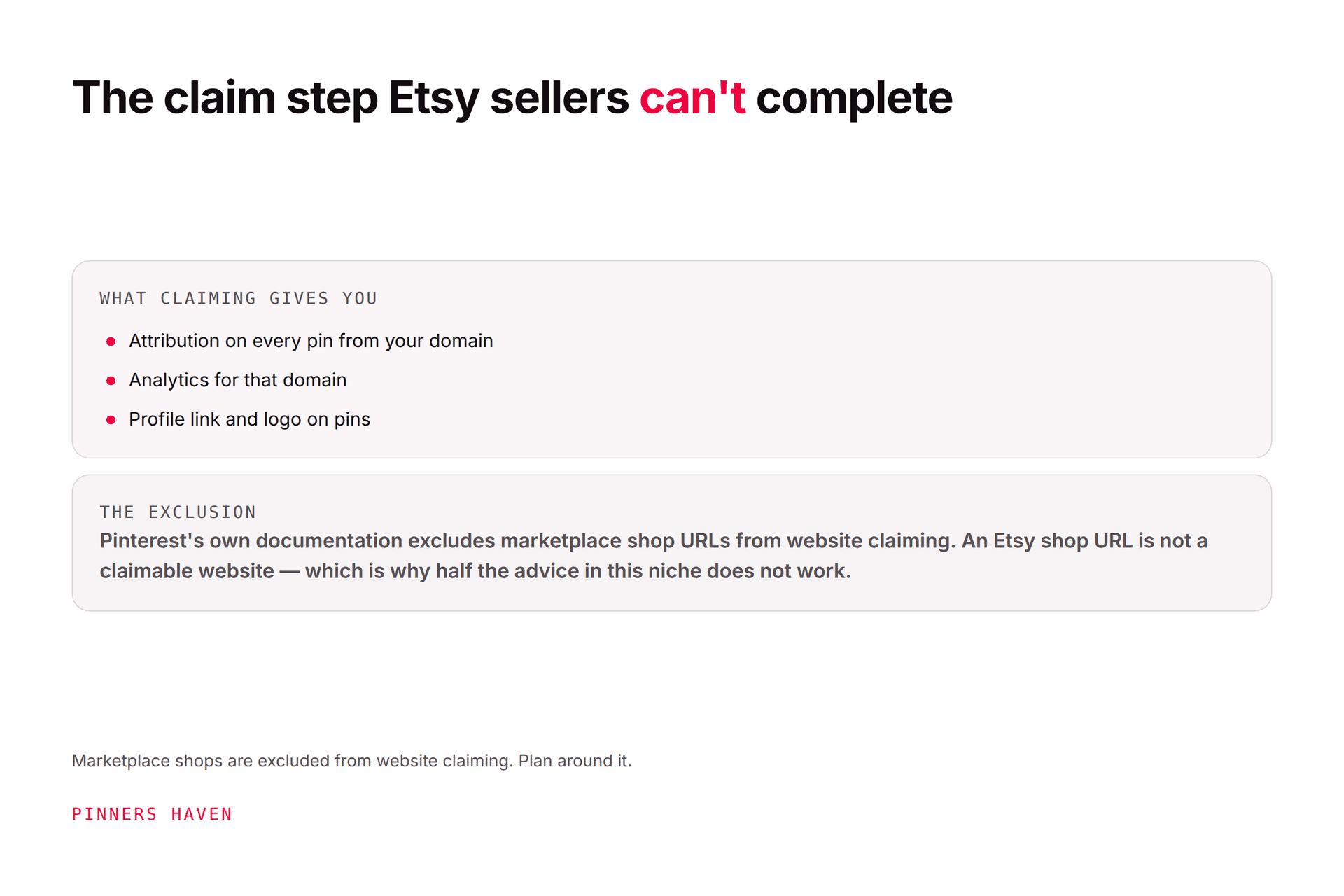
Pinterest says most marketplace shops (including Etsy, eBay, and Amazon) cannot be claimed, because you don't control the domain or the source code and can't upload the required file or add a DNS record. That's from Pinterest's own website claim guidance.
So if you've been hunting for the setting that lets you claim your Etsy shop: it isn't hidden, it doesn't exist, and you haven't done anything wrong.
What still works: a Pinterest business account, pins linked directly to live listings, original creative from photos you own, seasonal lead time, and measurement that follows the click all the way into Etsy Stats. That's the plan below.
Step 1 — prepare the listing first
Open your destination on a signed-out mobile browser before you make a single pin. That's what your Pinterest visitor sees.
The listing needs:
a clear first image
accurate title and description
current price and availability
dimensions, materials, variations, delivery details
shop policies and trust information
enough photos or video to actually decide
no contradiction between the pin and the listing
This step is unglamorous and it's the highest-return work in the article. Driving traffic to a listing that doesn't convert just means more people bounce, and Pinterest reads that too.

Step 2 — set up the business profile
Use a profile name and bio that make your category obvious. Build boards around buyer needs and occasions, not your internal product taxonomy.
For a handmade stationery shop:
Minimal Wedding Invitations
Garden Wedding Paper Ideas
Personalised Bridesmaid Gifts
Modern Save-the-Date Ideas
Small Wedding Planning Details
Notice these describe what a buyer is planning, not what you stock. That difference is most of Pinterest board strategy. Our niches guide helps narrow the position.
Step 3 — research buyer language and timing
Use Pinterest search and Pinterest Trends to learn how people describe the object, the recipient, the style, the problem, and the occasion.
Build phrases from truthful attributes:
Attribute | Example |
|---|---|
Product | ceramic mug |
Recipient | gift for teacher |
Style | speckled minimalist |
Occasion | end-of-year thank-you |
Feature | personalised name |
Don't attach popular aesthetics or occasions your listing doesn't actually serve. "Cottagecore" on a product that isn't cottagecore earns a click and loses a sale.
For seasonal products, find when the curve starts rising, then work backwards through photography, listing updates, production capacity, shipping deadlines, and pin publication. For a Q4 gift item that usually means starting in late summer — see Pinterest Trends.
Step 4 — make original pin concepts
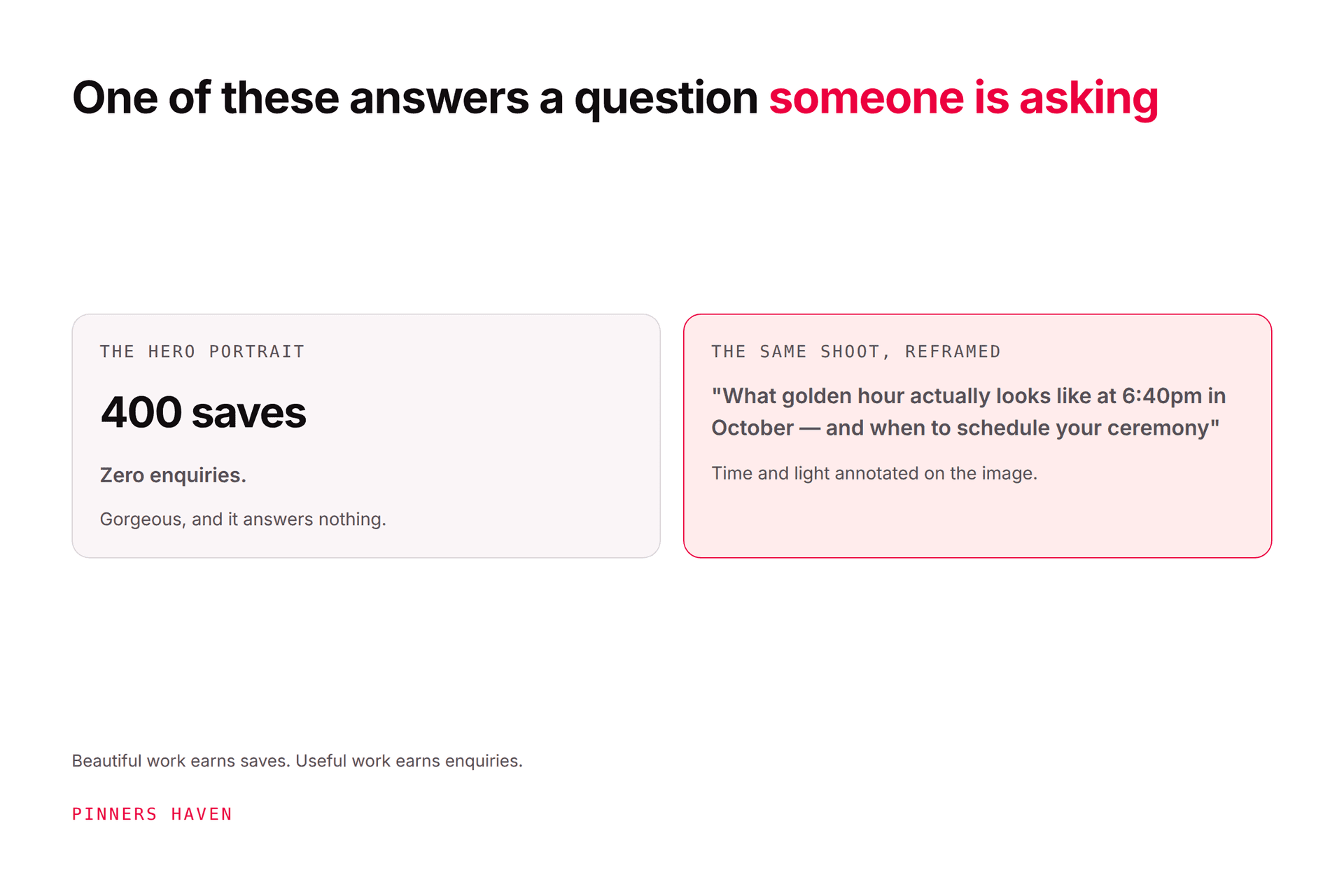
Use photography and video you own or are licensed to use. One listing supports several honest concepts:
clean product view with one defining benefit
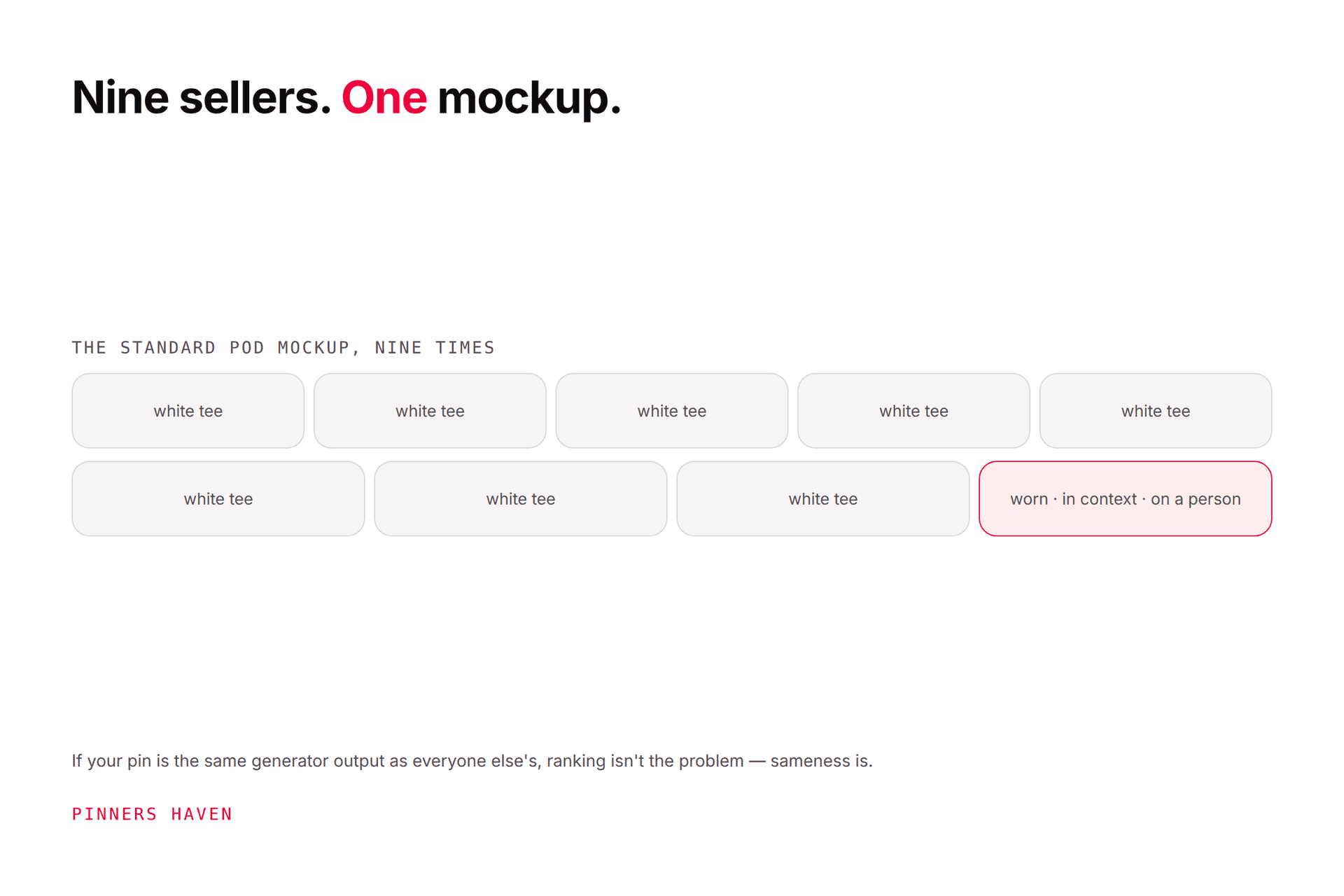
the product in its real use environment
a scale or dimensions demonstration
the personalisation process
material or craft detail
a gift guide for a specific recipient
a collection comparison
packaging and delivery expectation
Each adds context rather than covering the item with oversized text. Show variations accurately, and label mockups if a reasonable buyer could mistake them for the delivered product, that one matters both ethically and for your review scores.

Step 5 — write for clarity, not for hype
The title states the product and its differentiator. The description adds recipient, occasion, material, size, or use context.
Personalised speckled teacher mug with a hand-lettered name, available in two sizes. See current colours, production time, and delivery details on Etsy.
Check every factual detail against the live listing. Avoid "best," "perfect," "selling fast," manufactured scarcity, and delivery promises you can't guarantee — Pinterest's commercial guidelines and consumer law both take a dim view, and Etsy buyers are experienced enough to discount them anyway.
Step 6 — publish at a pace you can fulfil
Pinterest's distribution guidance recommends original content weekly, relevant context, quality vertical creative, and useful destination links, and warns against duplicate pins.
Match your cadence to your capacity. This is the failure specific to handmade sellers: a seasonal pin takes off, orders arrive, and you're now three weeks behind on a one-person production line with the reviews to show for it. Pause or update promotion when an item is unavailable, materially changed, or unlikely to arrive in time for the occasion.
Etsy's promotion help covers its social sharing tools. Confirm whether direct Pinterest sharing is available in your region: a manual workflow usually gives you far more control over the creative and copy anyway.
Step 7 — measure the whole path
Stage | The question | Where |
|---|---|---|
Impressions | Is Pinterest distributing this concept? | Pinterest Analytics |
Outbound clicks | Does the pin create shopping intent? | Pinterest Analytics |
Listing views | Is traffic arriving as expected? | Etsy Stats |
Favourites / carts | Does the listing earn consideration? | Etsy Stats |
Orders and profit | Does this work commercially? | Etsy Stats |
The two platforms won't attribute identically. Look for consistent patterns rather than forcing the numbers to reconcile, that reconciliation is a trap that eats hours.
A four-week plan
Week 1 — foundation. Pick five priority listings with strong photos, healthy inventory, clear policies, and useful margins. Build the boards. Record seasonal timing.
Week 2 — creative. Two distinct concepts per listing. Check rights, facts, crop, text size, price, URL, availability.
Week 3 — publish. Release with spacing. Test every live link on mobile. Don't post every product to every board.
Week 4 — review. Compare outbound clicks against Etsy behaviour. Fix one weak stage (click appeal or listing clarity) before adding any volume.
The part that doesn't scale
Steps 4 and 5, repeated. Two genuinely different concepts per listing, with accurate copy, checked against live inventory, week after week — across a shop with sixty listings.
That's where most Etsy sellers stall. You do it brilliantly for five listings, then the making and the shipping take over, and Pinterest goes quiet for a month.
Pinners Haven runs that loop: twenty angles per topic so one listing produces genuinely different pins, an SEO title and three to five unique descriptions each, an original design per pin, and a Freshness Meter that retires each template after roughly 5–10 uses. Everything waits for your approval before publishing on a paced cadence.
One of its published testimonials is from an Etsy shop owner, Dani R., who reports 3.1x saves versus the prior year — worth reading as one seller's result rather than a forecast for yours, since niche, price point, and photography all move that number enormously.
What it won't do: fix a listing, manage your inventory, or know when you're at capacity. Step 1 and step 6 stay yours.
→ Start a 14-day trial — from $19/mo billed annually. No card needed; when the trial ends, publishing pauses until you pick a plan.
(Disclosure: we make Pinners Haven. We're not affiliated with Pinterest.)
Nine mistakes to avoid
trying to claim Etsy.com as your domain
linking to a generic shop page when a precise listing exists
using supplier, customer, or other creators' images without permission
showing variations or packaging the buyer won't receive
leaving pins live with an inaccurate price or a sold-out item
keyword-stuffing descriptions
posting near-duplicate pins in bulk
promising free traffic or guaranteed sales
ignoring production and shipping capacity
Frequently asked questions
Can I claim my Etsy shop on Pinterest?
No. Pinterest states most marketplace shops, Etsy included, can't be claimed because sellers don't control the domain or source code. If you run your own site alongside the shop, claim that instead.
Is Pinterest free for Etsy sellers?
Organic pins and a business profile don't require ad spend. Photography, tools, and your own time still cost something, so treat it as a channel with real production costs rather than free traffic.
Should every pin link directly to a listing?
Use whichever destination completes the promise. A product pin should reach that product. A collection or educational idea might justify a shop section or a page on a site you control.
Can I automate Etsy pins?
Automation can prepare and schedule reviewed pins. It must never publish stale prices, unavailable products, duplicates, or unapproved claims, and inventory changes constantly on Etsy, which makes the approval gate more important here than almost anywhere. See safe Pinterest automation.
Can I use affiliate links to Etsy?
Program eligibility, link rules, platform policy, and disclosure law all need separate review. Our affiliate marketing guide covers the compliance questions.
How long before Pinterest sends Etsy traffic?
No guaranteed window — Pinterest says pins can gain engagement months or years later. Seasonal products follow the demand curve rather than your publishing date, which is why lead time matters more than volume here.
Make the listing earn the click
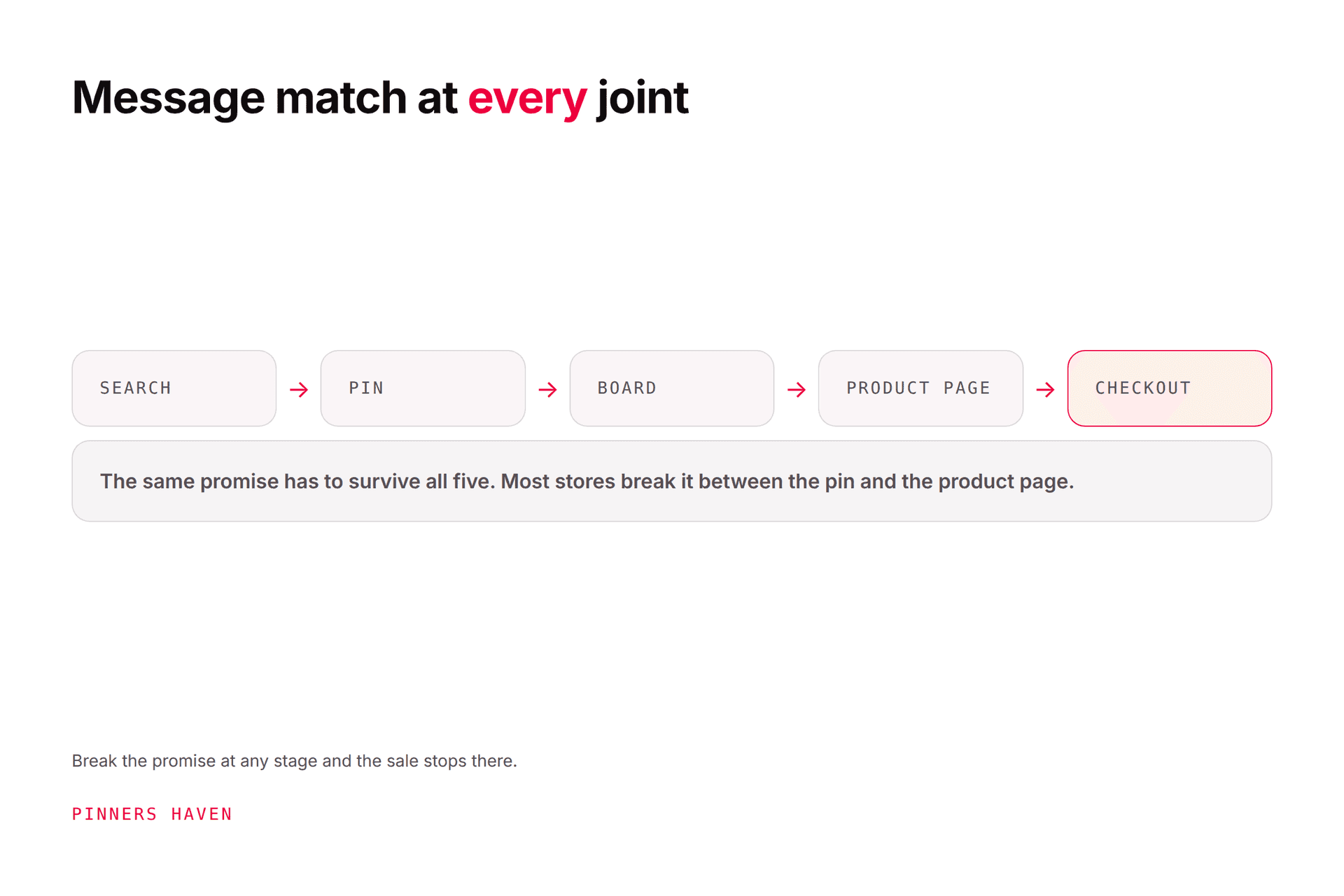
Pinterest introduces your product to someone already planning a purchase or a project. The pin sets a truthful expectation; the listing then has to supply the detail, trust, availability, and delivery information they need to act.
Get that handoff right and the traffic is worth having. Get it wrong and more traffic just means more people leaving.