Open your product page on a phone before you make a single pin. Confirm it loads fast, names the product clearly, shows accurate photos, explains variants, states price and availability, covers delivery, links the returns policy, and makes checkout easy.
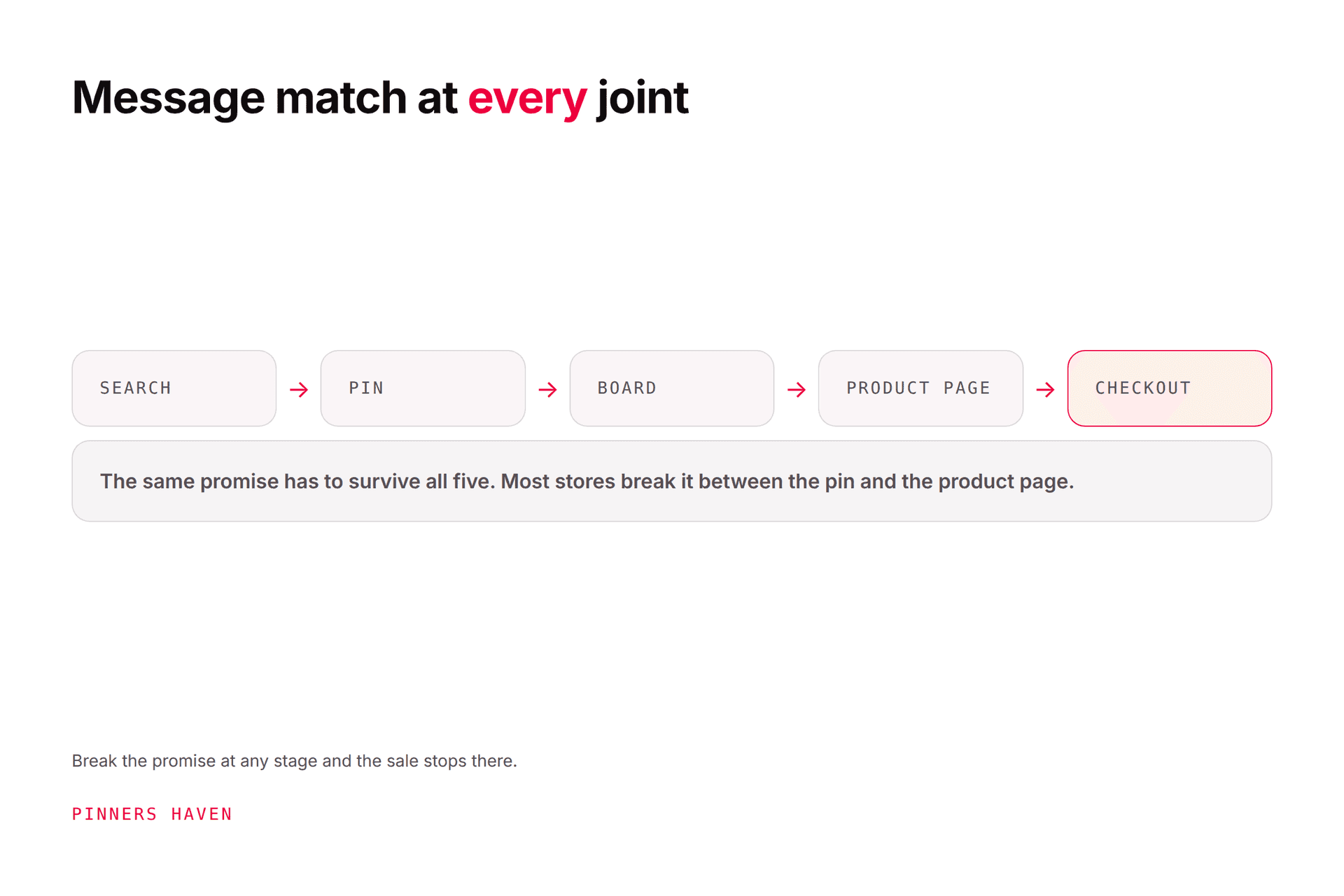
Then check message match. A pin for "Blue Linen Table Runner, 72 Inch" should not land on your homepage or a search page with 200 results. Send the visitor to that product, or to a tightly relevant collection if choice is genuinely the promise.
This step is boring and it is the highest-return work here. More traffic to a page that doesn't convert is a cost, not a win.
Free, and it provides Analytics plus merchant tools where eligible. Create one or convert a personal account while keeping pins and followers — see our business account guide.
Build the profile around the customer and product category, not a keyword list.
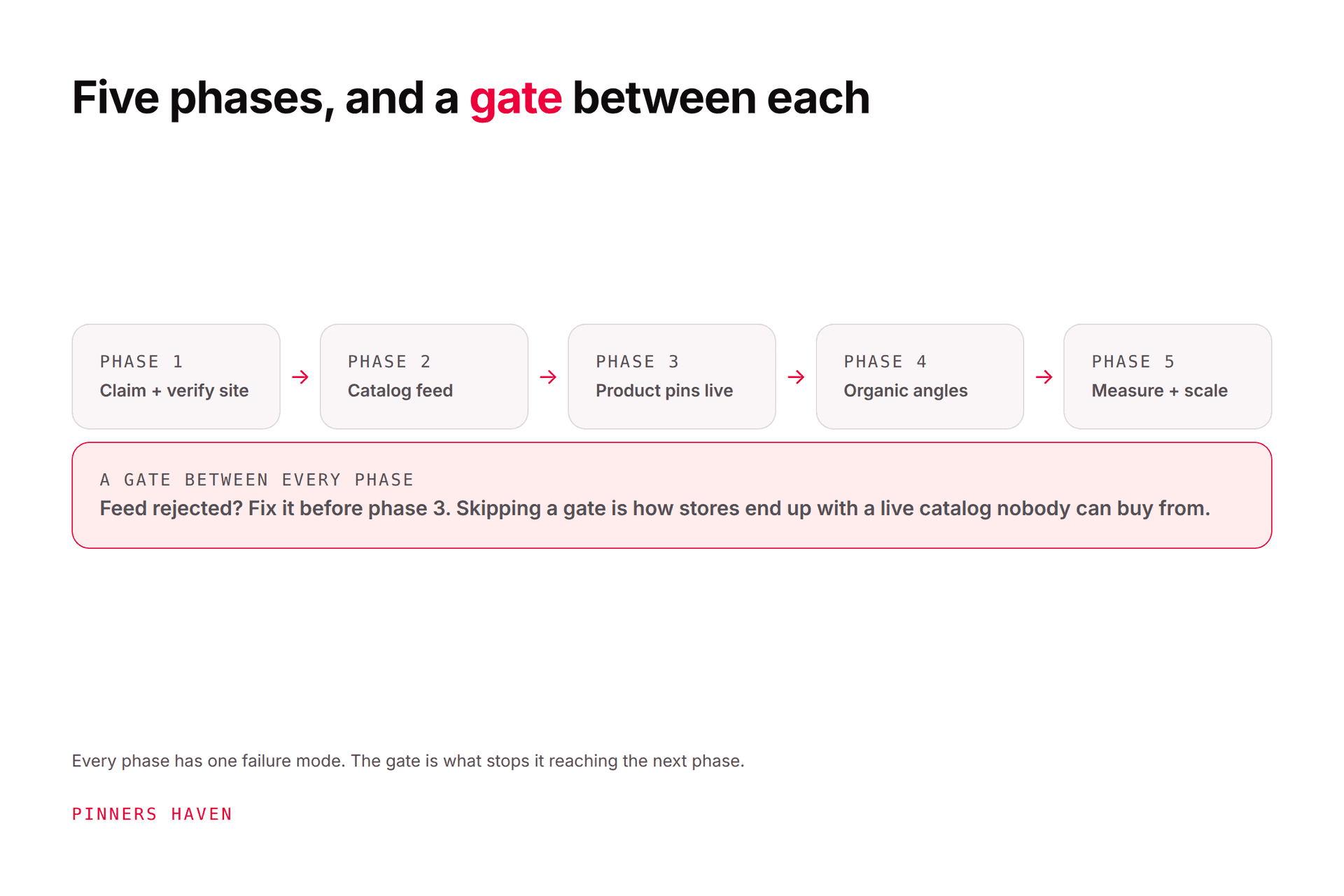
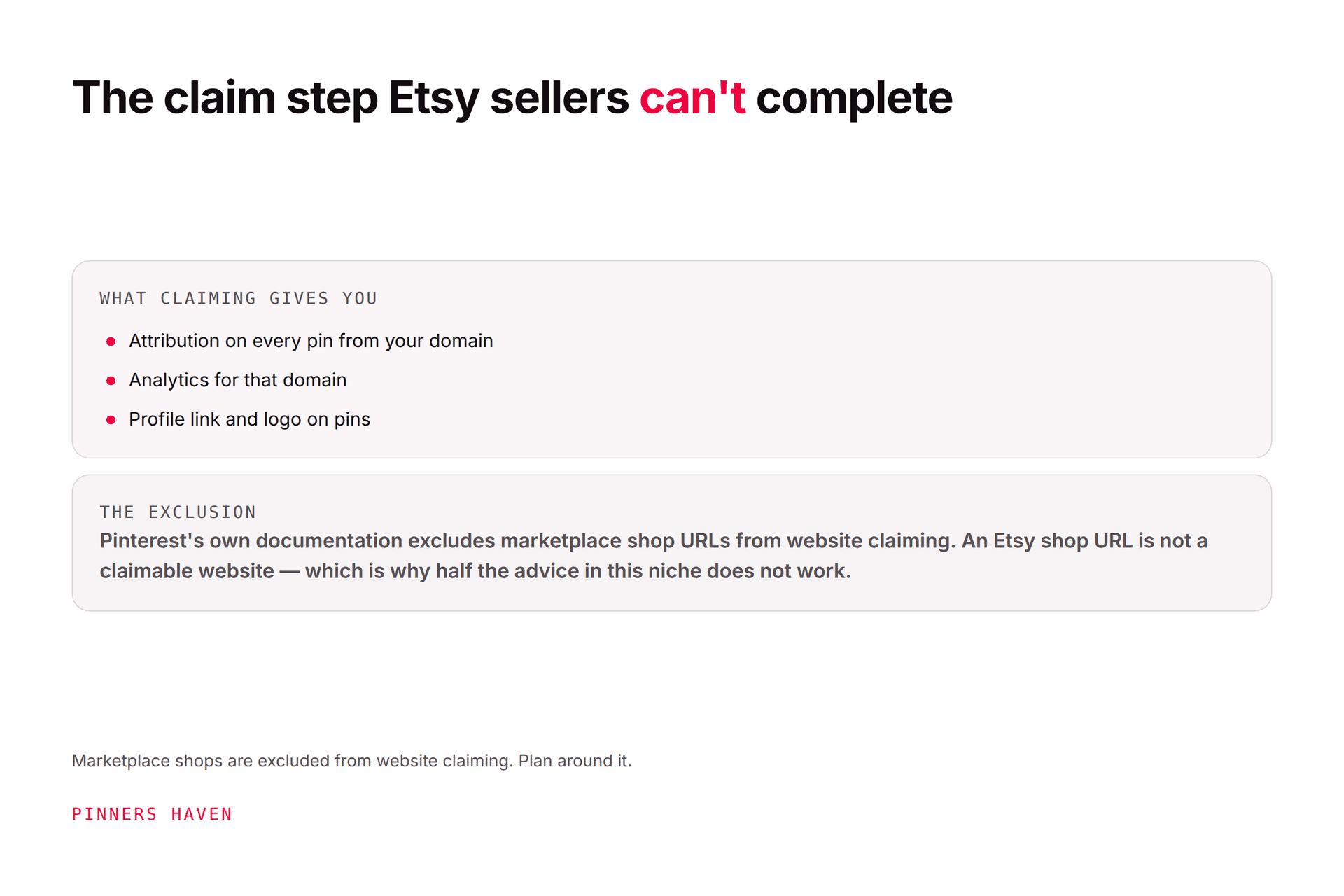
Claiming verifies your relationship with an eligible domain, provides analytics for pins linking to it, and is a prerequisite for retail catalogs. HTML tag, HTML file, or DNS TXT — Pinterest's claiming instructions.
Marketplace storefronts often can't be claimed because you don't control the code or DNS. You can still link to permitted listings; you just won't get every claimed-domain benefit. Etsy specifics are in our Pinterest for Etsy guide.
Catalog setup currently requires a business account, claimed website, Pinterest tag, compliant merchant site, and a correctly formatted data source — see catalog prerequisites. Availability varies by country.
Don't delay all publishing while you build a catalog. A small set of carefully made organic pins tests demand in a fortnight; a catalog integration can take considerably longer and tells you nothing about whether anyone wants the product.
Start with the product, then expand around material, recipient, room, style, occasion, problem, and season.
"Planner" is vague. "Undated weekly planner for teachers" describes a shopper and a use case.
Map searches to destinations:
Use autocomplete and Pinterest Trends for language and timing — Trends gives directional interest, not absolute volume. Full method in our keyword guide.
The pin should help a shopper understand the outcome before you ask for a click. Original or licensed images, scale and context shown, readable text, no clutter. Pinterest recommends 2:3, commonly 1000×1500.
Genuinely different angles from one product:
the product in context
a close-up of a useful detail
a size or fit guide
a truthful before-and-after result
a gift or seasonal use case
a comparison or care guide
Each needs its own natural title and description. Pinterest says complete metadata and relevant boards help distribution.
Board names should reflect what a shopper understands — "Small Entryway Storage," not "Collection 4." Save each pin first to its closest board.
Don't create dozens of near-empty boards, and don't save one identical pin across every board at once — that's the duplicate pattern that draws flags.
Pinterest Analytics for outbound clicks; store analytics for product-page sessions, add-to-carts, checkout starts, and orders. Add campaign parameters to distinguish creative angles where you can.
Diagnostic patterns:
That last row is the one that compounds, and it's the one people turn into duplicates instead of new concepts.
Step 6, across a full product range.
Three genuinely different angles per product, each with its own copy, checked against live price and stock, refreshed each season — for forty SKUs. That's where organic Pinterest selling stalls, and the symptom is a shop account where the five hero products have good pins and everything else has one photo.
Pinners Haven handles that layer: twenty angles per topic, an SEO title and three to five unique descriptions per pin, original designs on human-designed templates, and a Freshness Meter retiring each design after roughly 5–10 uses. Everything waits for approval before publishing on a paced cadence.
Keep product facts under human review. Price, availability, variants, and claims change constantly in commerce, and an approval gate matters more here than in almost any other niche: a pin advertising a sold-out item is worse than no pin at all.
It also doesn't manage your catalog, sync inventory, or install your tag. Steps 1, 3, and 4 stay yours.
→ Start a 14-day trial — from $19/mo billed annually. No card needed; when the trial ends, publishing pauses until you pick a plan.
(Disclosure: we make Pinners Haven. We're not affiliated with Pinterest.)
Week 1 — prepare. Fix mobile product pages, create the business profile, claim the site, choose three focused boards. Select five products with clear demand or distinctive use cases.
Week 2 — build. Research searches, create two or three genuinely different pins per product, test every URL. Add product metadata or start catalog setup if it fits.
Week 3 — publish. Steady schedule, closest board, no duplicate bursts. Record the search angle, creative, destination, and date.
Week 4 — diagnose. Review early distribution and clicks, but don't call it on impressions alone. Fix mismatched pins or pages first, then continue the strongest themes.